
For builders, GCs and site owners
Construction Site Hydroseeding in New Orleans, LA
Fast cover for disturbed ground, scheduled around your trades and your stormwater permit.
- We walk your lot at no charge, then send the quote in writing
- Grading, topsoil, seed and erosion controls priced as separate lines
- 811 utility locates requested before we grade or dig
Cover That Keeps the Site in Compliance
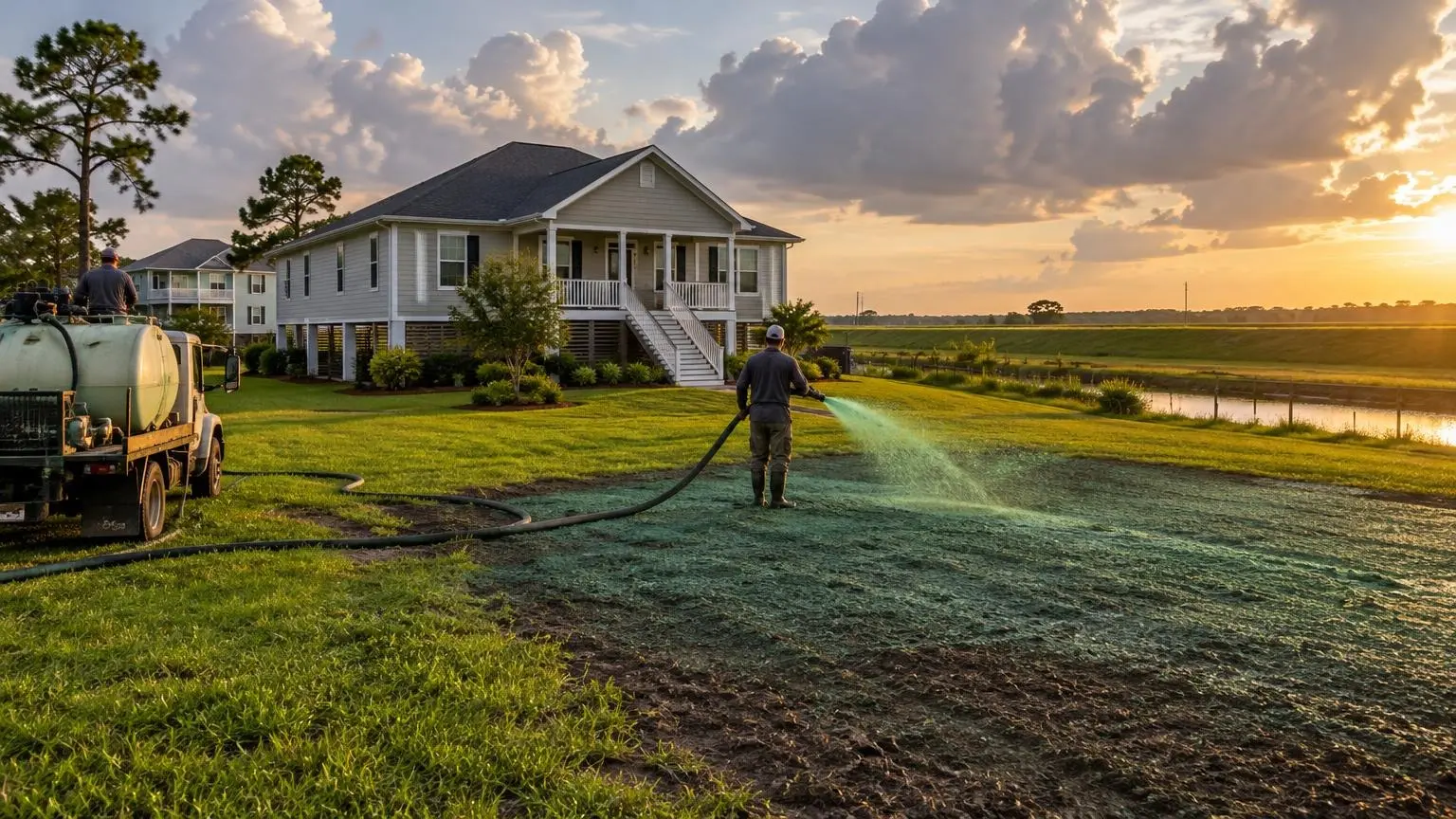
Construction site hydroseeding gets bare, graded ground in New Orleans covered fast, whether the goal is a temporary hold between phases or the final cover that lets a project close out. We work for home builders, general contractors, site work firms and property owners on subdivision lots, commercial pads, parking lot islands, detention areas, roadside shoulders and drainage swales. As hydroseeding contractors, we bring the tank, the seed and mulch, and the erosion controls that go with them.
Why cover matters on a permitted site
Federal stormwater rules require a permit once construction disturbs one acre, and smaller disturbances need one too if they fall within a "larger common plan of development or sale." Every construction stormwater permit has to meet the federal minimums: effective erosion and sediment controls, and stabilization of disturbed areas immediately once work has stopped with no restart planned within 14 days. A graded pad that will sit while the building permit, utilities or financing catch up is exactly the ground those rules target. A hydroseed or hydromulch application covers it in a day.
Temporary seeding versus final cover
Temporary cover is about holding soil for weeks or months: a quick-establishing seed mix, mulch and tackifier on stockpiles, pad edges and future phases. Final cover is the permanent grass that goes in once grading is finished and the landscape plan is set. On commercial and multi-family work, Article 23 of the city's zoning ordinance requires a landscape plan, and at least half of required landscaped area is to be built as green stormwater infrastructure. Parking lots get a detention area that may be grassed or planted. We seed to the approved plan and coordinate with the landscape installer on what is turf and what is planted.
Graded clay is hard to seed
Much of the ground here is clay. The USDA describes Sharkey soils, common in Mississippi River backswamps, as very slowly permeable with 60 to 90 percent clay below the surface. Once a dozer has smoothed and compacted that kind of soil, it sheds water like pavement. Seed sprayed on a slick clay face can sheet off in the first storm. We ask the grading crew to leave the surface rough or tracked up and down the slope, or we scarify it ourselves, and on finished areas we add a topsoil layer where the plan calls for it.
Scheduling around other trades
The right time to seed is after the last truck has crossed the area. We phase work so finished sections get cover first, keep a buffer off curbs and inlets that are still protected, and come back for areas opened by late utility work. On a long job we can seed temporary cover early and overseed with the permanent mix later. Tell us the inspection dates you are working toward.
Season and water
Rain here averages more than 63 inches a year at the airport, with June the wettest month. That helps germination but punishes bare ground. The airport's daily mean stays above 70 degrees from April through October, the stretch when warm-season seed grows quickly. Outside that window, mulch and tackifier still provide immediate cover while growth slows. Germination needs water: we need a water source on site, or we haul it, and we plan watering with your superintendent.
Why hydroseeding companies quote per acre
Large areas are priced by the acre because the truck covers ground quickly once it is set up. Consumer guides put large-area hydroseeding from about $2,000 to $4,900 per acre, and the two bids on a 2023 municipal job in North Little Rock, Arkansas were $2,595 and $3,325 per acre. Access, water hauling, mulch rate and the number of mobilizations change that. Our written estimate shows each one.
What we need from you
- Site plan or landscape plan with turf areas marked
- SWPPP or erosion control plan, if the project has one
- Areas ready now and expected phase dates
- Water source location and site access rules
Site Work We Seed
Temporary holds, final stabilization and the stormwater areas in between.
Builder lots
Front and rear yards on new homes, seeded after final grade.
Commercial pads
Temporary cover on graded pads waiting for vertical construction.
Detention areas and swales
Grassed basins, bioswales and channels seeded to plan, with blankets where flow is strong.
Stockpiles and phase areas
Fast cover on soil that will sit more than 14 days.
Shoulders and right-of-way
Seed and mulch on road shoulders, ditch backslopes and utility corridors.
Parking lot islands and buffers
Turf areas called out in the landscape plan.
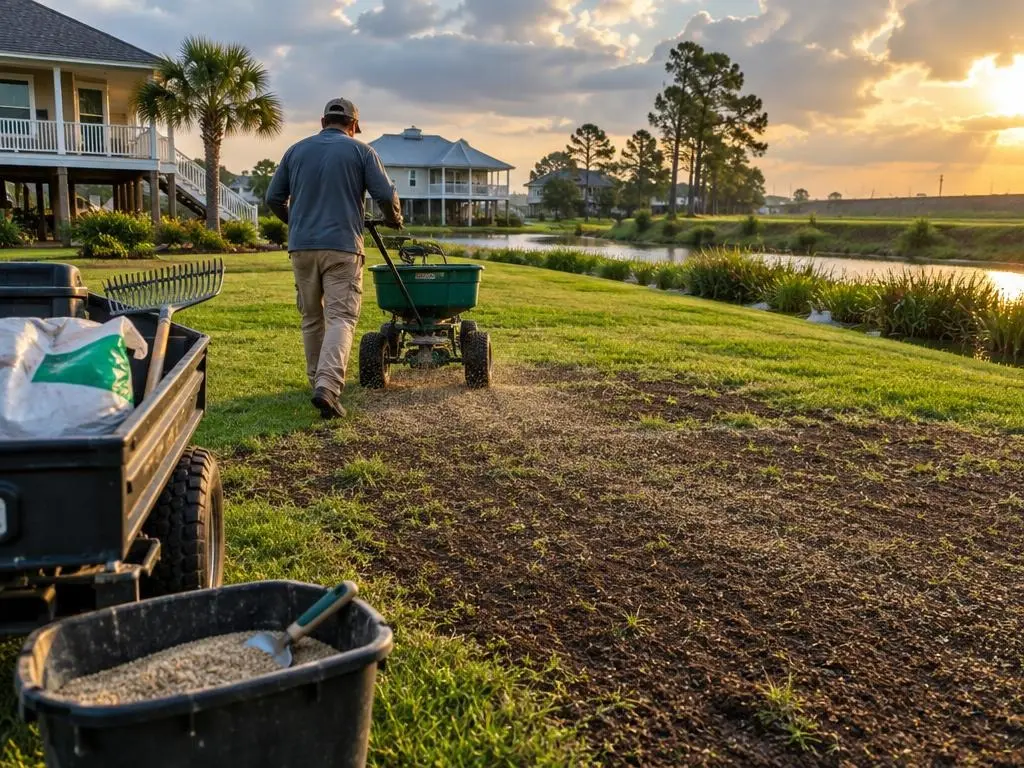
Large-Area Hydroseeding Ranges
| Measure | Published range |
|---|---|
| Hydroseeding per acre (LawnStarter) | $2,136 to $4,897 |
| Hydroseeding per acre (Fixr) | $2,000 to $4,000 |
| One acre (HomeAdvisor) | $2,600 to $8,700 |
| One acre (HomeGuide) | $5,000 to $8,500 |
| Municipal bid, 2023, North Little Rock, AR (two bidders) | $2,595 and $3,325 per acre |
| Hydromulch of sprayed wood fiber, per 1,000 sq ft (a state highway department's 2025 rates) | $98 |
Reference ranges. We lock your price in a written proposal.
How a Site Gets Seeded
1. Plan review
We read the site and landscape plans and the erosion control plan, if there is one.
2. Walk and quote
We check grade, access and water, then quote by area and mobilization.
3. Surface prep
Compacted clay is roughened or tracked; topsoil is placed where specified.
4. Apply
Seed, mulch, fertilizer and tackifier at rates set for slope and season.
5. Follow-up
We inspect growth, reseed thin or washed areas and help close out stabilization.
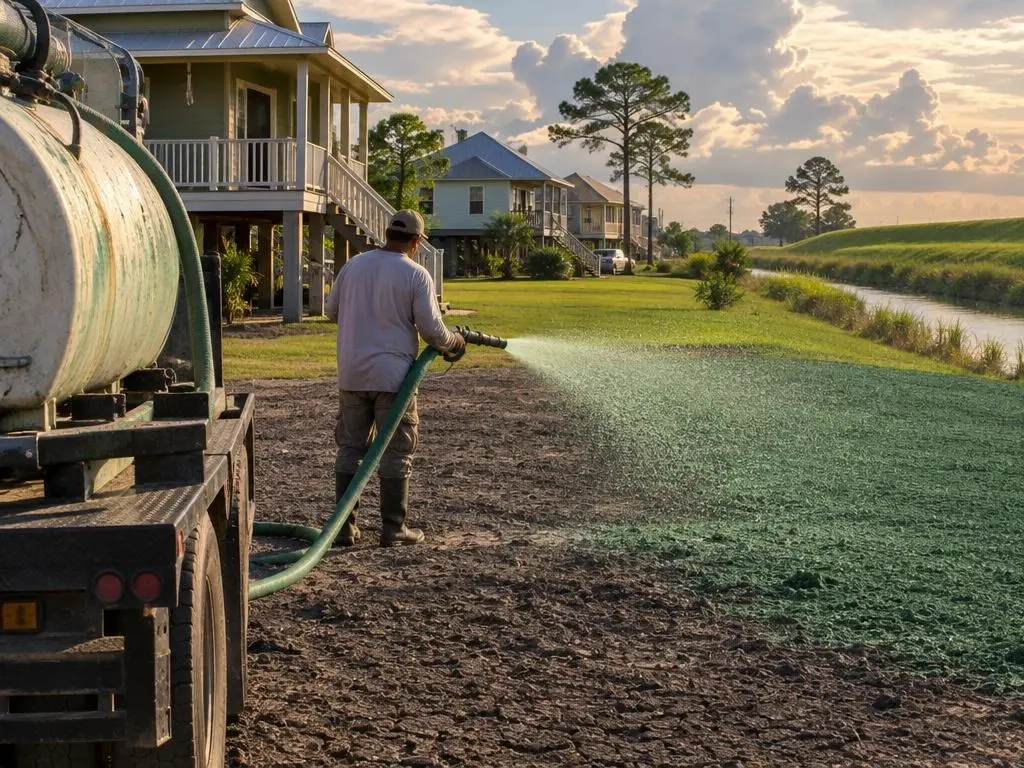
Why Choose Us for Construction Site Hydroseeding
Erosion controls from the same crew
Silt fence, inlet protection and blankets are part of our own work.
Phase-friendly
We come back for each section as it is finished instead of waiting for the whole site.
Per-area pricing
Estimates break out acreage, mulch rate, water and trips.
Plan-driven
We seed to your landscape and erosion control plans.
Construction Site Hydroseeding Questions
Do you work for builders and general contractors?
Yes. Most of our site work is for builders, GCs and site work firms. We can seed lot by lot as homes finish or cover a whole phase at once.
How fast can you cover a site that has to be stabilized?
Once the area is graded and accessible, the spray itself goes quickly. Mulch and tackifier cover the soil the same day, before the grass comes up.
Can you seed in winter?
Yes. Growth slows, but mulch and tackifier still stabilize the surface right away. We adjust the seed mix and return to touch up in spring.
Do you supply water?
We prefer a water source on site. If there is none, we haul water, and the estimate shows that cost.
What about steep pond banks or channels?
Those usually need erosion control blankets or heavier mulch rather than standard hydroseed. We price them separately.
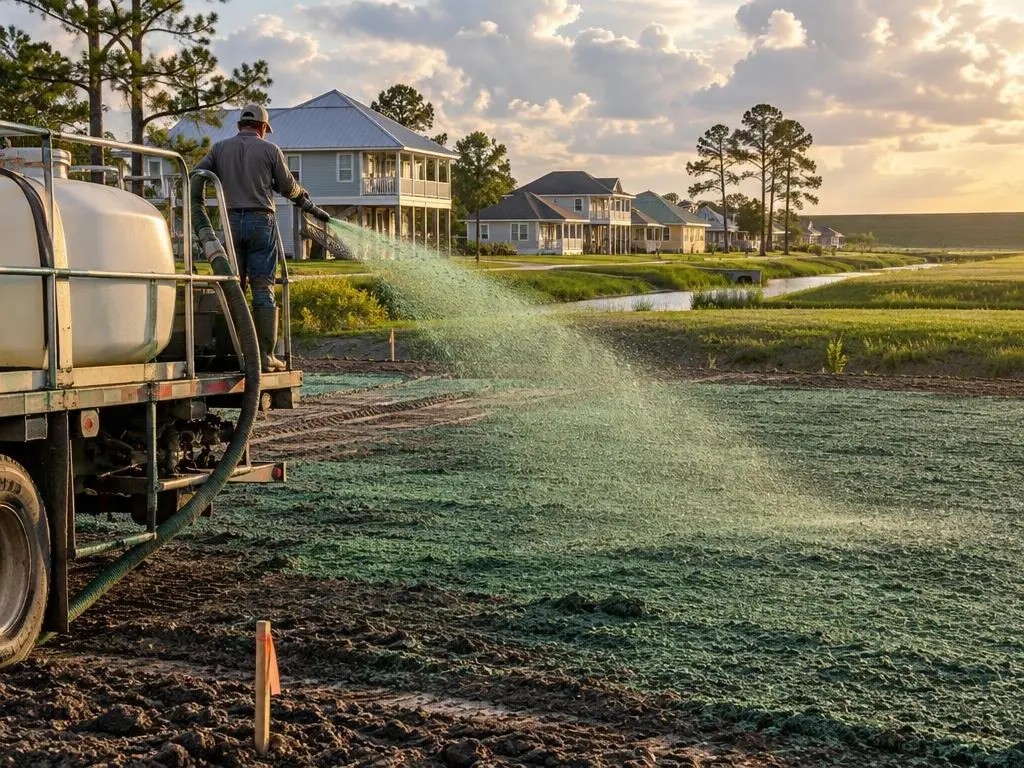
Construction Site Hydroseeding Service Areas
- Hydroseeding in New Orleans, LA
- Hydroseeding in Metairie, LA
- Hydroseeding in Kenner, LA
- Hydroseeding in Harahan, LA
- Hydroseeding in River Ridge, LA
- Hydroseeding in Gretna, LA
- Hydroseeding in Harvey, LA
- Hydroseeding in Marrero, LA
- Hydroseeding in Westwego, LA
- Hydroseeding in Terrytown, LA
- Hydroseeding in Belle Chasse, LA
- Hydroseeding in Chalmette, LA
- Hydroseeding in Arabi, LA
- Hydroseeding in Destrehan, LA
- Hydroseeding in Luling, LA
- Hydroseeding in LaPlace, LA
- Hydroseeding in Slidell, LA
- Hydroseeding in Mandeville, LA
- Hydroseeding in Covington, LA
- Hydroseeding in Madisonville, LA
- Hydroseeding in Abita Springs, LA
- Hydroseeding in Pearl River, LA
Get a Construction Site Hydroseeding Estimate
Send your plans and we will quote by area.