
Thin, patchy or worn out
Lawn Repair & Reseeding in New Orleans, LA
Patch, overseed or renovate, using the method that fits the grass you already have.
- We walk your lot at no charge, then send the quote in writing
- Grading, topsoil, seed and erosion controls priced as separate lines
- 811 utility locates requested before we grade or dig
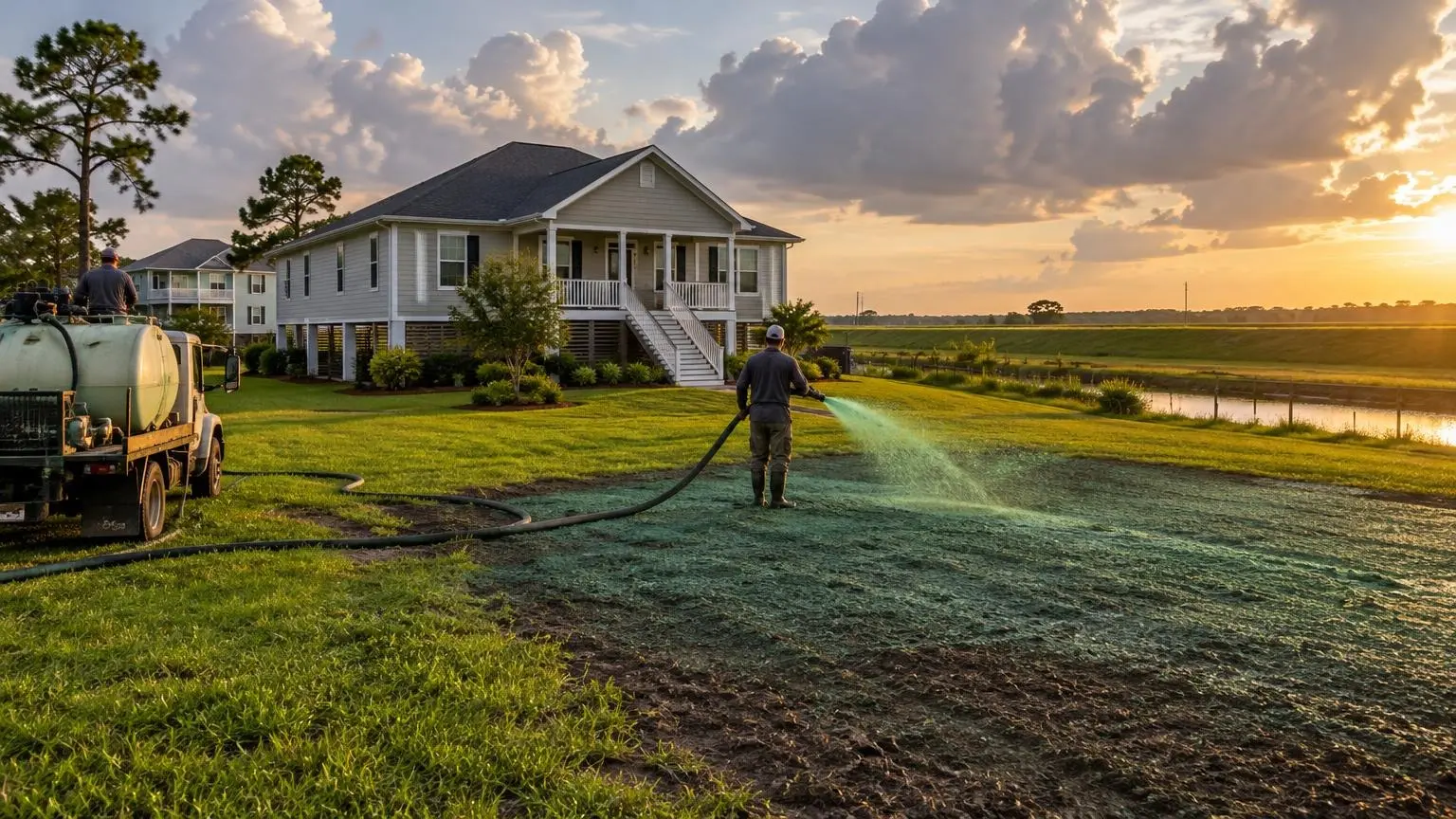
Fixing a Lawn Without Starting Over
Lawn repair and reseeding covers everything between a few bare spots and a full lawn renovation. In New Orleans the usual causes are standing water after heavy rain, ruts from trucks during a rebuild or roof job, dog paths, shade under big trees, and the bare strips left after utility or drainage work. We diagnose why the grass failed, fix the cause where we can, and bring the turf back with seed, hydroseed or sod depending on the grass already in the yard.
First, what grass is it
The repair method depends on the existing lawn. St. Augustine has typically been propagated by plugs, sprigs or sod, since viable seed only became available commercially in recent years. Bare spots in a St. Augustine lawn are usually patched with sod or plugs, and the surrounding grass creeps in. Bermudagrass spreads by seed, stolons and rhizomes, so it can be reseeded or overseeded directly. Centipedegrass is shallow rooted with poor drought tolerance; it turns brown with a light freeze but re-greens as it warms, so a brown centipede lawn in February may not need repair at all.
Overseeding versus renovation
Overseeding spreads new seed into an existing thin lawn to thicken it. It works when most of the lawn is alive and the grass is a type that grows from seed. Renovation is for lawns that are mostly weeds or bare: we kill or strip what is there, fix grade and soil, and hydroseed or sod the whole area. The deciding question is how much healthy grass is left. If it is less than about half, starting over is usually cheaper in the long run.
Fixing the cause
Grass that drowned in a low spot will drown again if the spot is not raised. Grass that thinned under a tree canopy will thin again unless the shade is managed or a more shade-tolerant grass is used. Compacted clay from equipment needs to be loosened before seed can root. Backswamp clays like the USDA's Sharkey series are 60 to 90 percent clay below the surface, so compaction is common after construction. We core-aerate compacted areas, fill and regrade low spots, and add topsoil where the surface is hard or thin.
When to reseed
Warm-season grass seed needs warm soil. Bermudagrass starts actively growing above about 59 degrees, and New Orleans's daily mean temperature stays above 70 from April through October. Angi points to late spring through mid-summer for warm-season seeding. We schedule most reseeding from April through early fall. Sod patches can go in over a longer season because they do not depend on germination, though they still need water to root.
After a flood or long ponding
Turf that sat under water for days often thins or dies in patches, and silt can be left on top. We scrape off heavy silt deposits, check whether the low area needs fill, and replant once the soil firms up. In many yards, water that stood for days points to a grading problem; our yard grading service handles that before the new grass goes in.
Keeping new seed alive
The watering rules for repairs are the same as for a new lawn: keep the seedbed damp. The University of Nebraska Extension calls for a minimum of two to three light waterings daily during hot spells, and Iowa State Extension recommends continuing light waterings for about three weeks. Patches are easy to forget, so we flag them. Mow the surrounding lawn at its normal height and avoid fertilizing or applying weed control on new seed until it is established.
What we repair
- Bare spots from standing water, pets, foot traffic and shade
- Ruts and tracks from trucks and equipment
- Utility trench lines and drainage work scars
- Thin bermudagrass lawns that need overseeding
- Weedy or mostly bare lawns that need a full renovation
Repair Options
We pick the method by grass type and how much healthy turf is left.
Bare-spot seeding
Spots loosened, topdressed and seeded or hydroseeded.
Sod and plug patches
For St. Augustine and other lawns normally planted vegetatively.
Overseeding
New seed worked into a thin bermudagrass lawn to thicken it.
Core aeration
Plugs pulled from compacted clay so water, air and roots can get in.
Rut and trench repair
Ruts filled, trench lines leveled and replanted.
Full lawn renovation
Old turf removed, grade and soil fixed, new lawn hydroseeded or sodded.
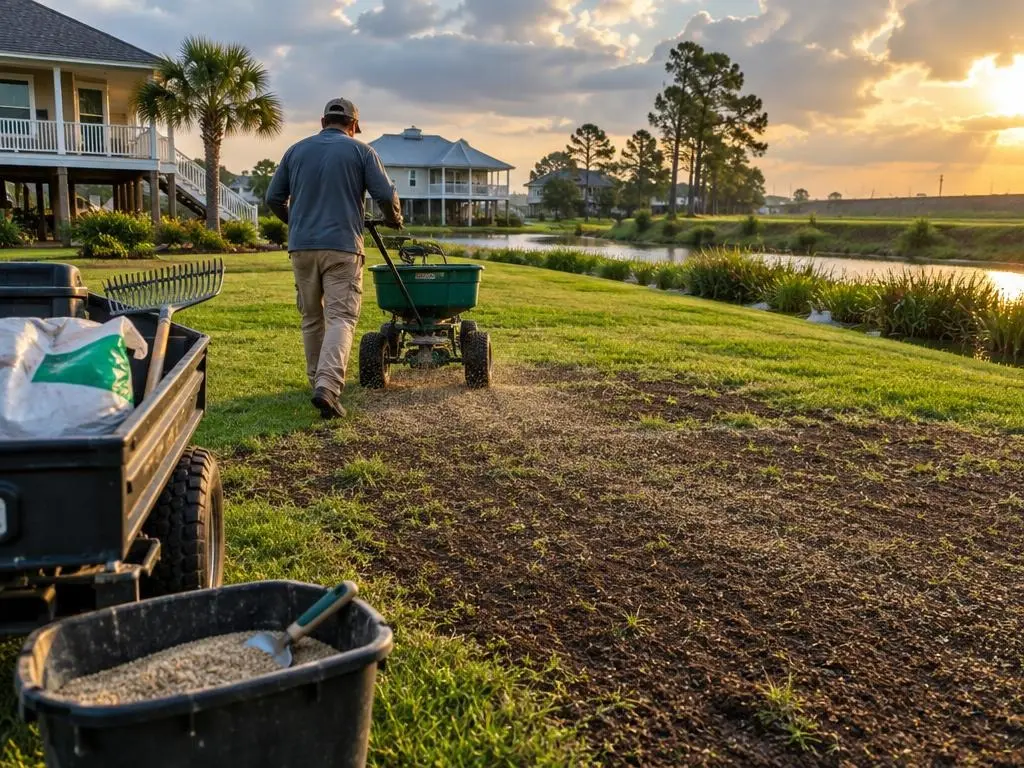
Lawn Repair and Overseeding Ranges
| Item | Published range |
|---|---|
| Overseeding, per sq ft (Lawn Love) | $0.07 to $0.23 |
| Aerate and overseed, per acre (Fixr) | $700 to $1,400 |
| Aerate and overseed, per sq ft (Fixr) | $0.08 to $0.25 |
| Aerate and overseed, average (Bob Vila) | $100 to $160 |
| Professional lawn seeding (Angi) | $250 to $350 |
| Reseeding, average (HomeAdvisor) | $1,083 |
| Full lawn repair or renovation | Set once we see the lawn (no current published price) |
Reference ranges. We lock your price in a written proposal.
How We Repair a Lawn
1. Diagnose
We identify the grass and find out why it failed: water, shade, compaction or traffic.
2. Fix the cause
Low spots raised, compacted soil aerated, shade issues discussed.
3. Prepare the spots
Dead turf and debris removed, soil loosened and topdressed.
4. Replant
Seed, hydroseed, plugs or sod, matched to the existing lawn.
5. Grow-in
Watering instructions and a follow-up check on the repairs.
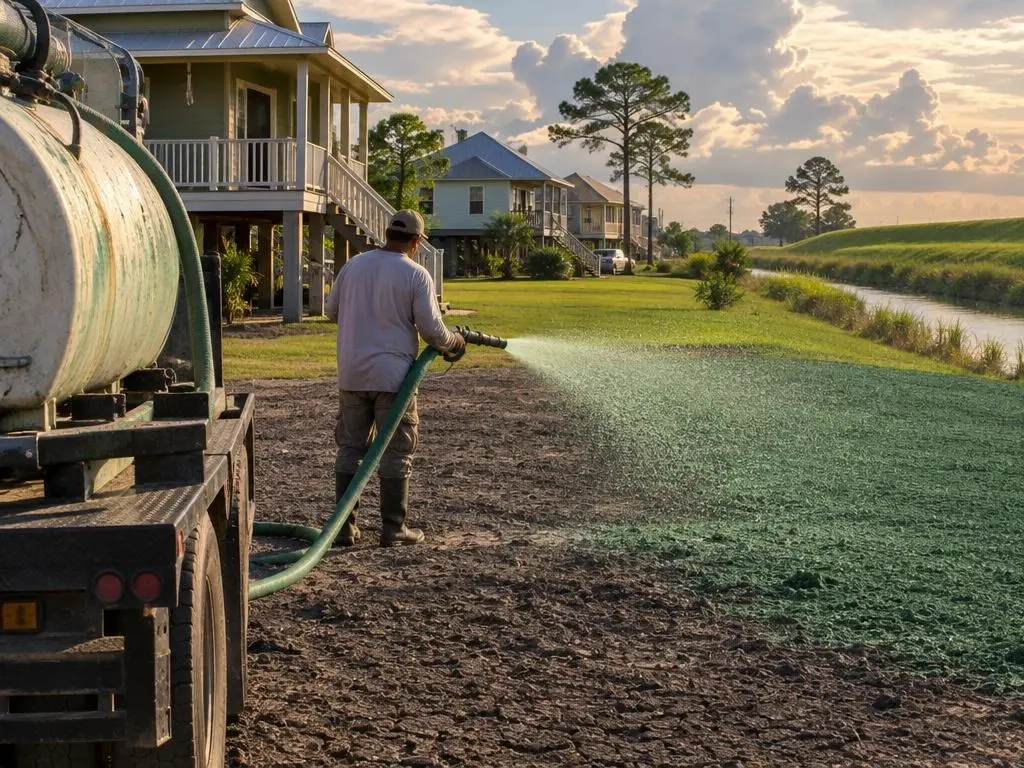
Why Choose Us for Lawn Repair & Reseeding
Method matched to grass
Sod or plugs for St. Augustine, seed where it works.
Causes fixed first
We regrade and aerate so the same spot does not fail again.
Repair or renovate, honestly
We tell you when starting over costs less.
Lawn Repair & Reseeding Questions
Can I overseed a St. Augustine lawn?
Not in the usual sense. St. Augustine has typically been planted as sod, plugs or sprigs. Bare spots are best patched with sod or plugs and left to spread.
My lawn turned brown in winter. Is it dead?
Possibly not. Warm-season grasses go dormant in cold weather, and centipedegrass browns with light freezes but re-greens as it warms. We can check in spring before you spend money.
When should I reseed a bermudagrass lawn?
From April into early fall, when temperatures keep warm-season seed growing. Late-fall seedings have little time to establish before winter.
Is it cheaper to repair or replace my lawn?
When most of the lawn is still healthy grass, repairing it usually makes more sense. If it is mostly weeds or bare, renovation is often cheaper over time.
Do you fix ruts from construction equipment?
Yes. We fill and level ruts, loosen the compacted soil, and replant to match the lawn.
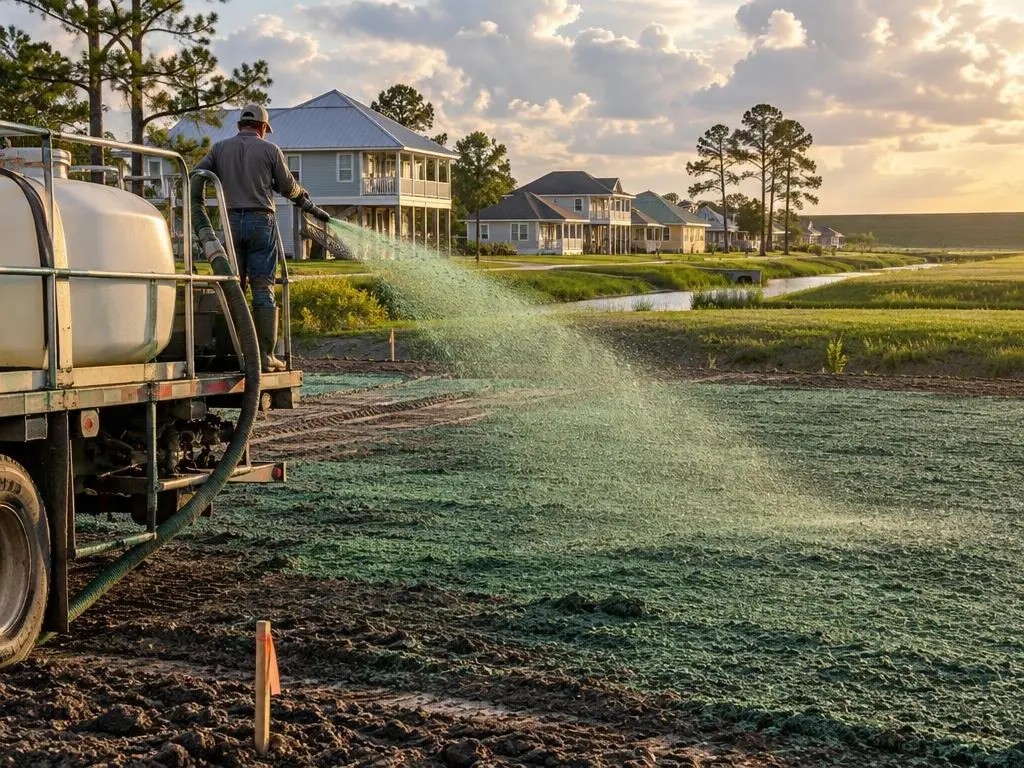
Lawn Repair & Reseeding Service Areas
- Hydroseeding in New Orleans, LA
- Hydroseeding in Metairie, LA
- Hydroseeding in Kenner, LA
- Hydroseeding in Harahan, LA
- Hydroseeding in River Ridge, LA
- Hydroseeding in Gretna, LA
- Hydroseeding in Harvey, LA
- Hydroseeding in Marrero, LA
- Hydroseeding in Westwego, LA
- Hydroseeding in Terrytown, LA
- Hydroseeding in Belle Chasse, LA
- Hydroseeding in Chalmette, LA
- Hydroseeding in Arabi, LA
- Hydroseeding in Destrehan, LA
- Hydroseeding in Luling, LA
- Hydroseeding in LaPlace, LA
- Hydroseeding in Slidell, LA
- Hydroseeding in Mandeville, LA
- Hydroseeding in Covington, LA
- Hydroseeding in Madisonville, LA
- Hydroseeding in Abita Springs, LA
- Hydroseeding in Pearl River, LA
Get a Lawn Repair & Reseeding Estimate
Send photos of the problem areas and we will suggest a fix.